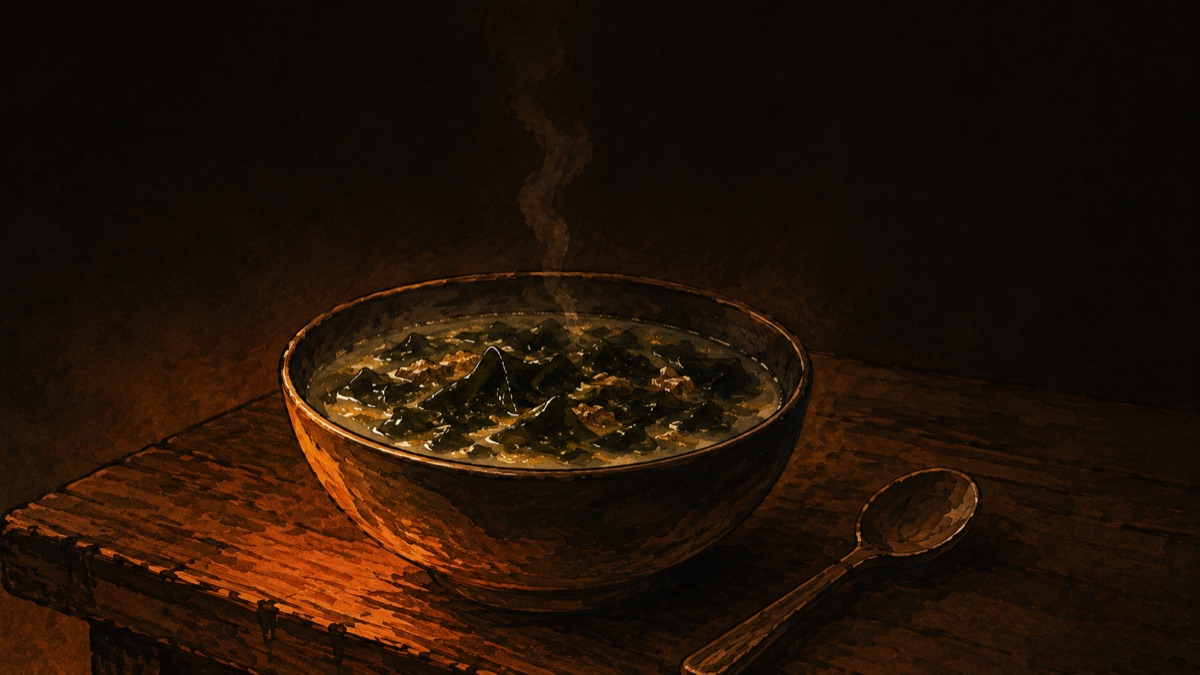
In Korea, there is a soup that arrives twice. Once at your birth, when your mother eats it. And then once a year, every year, when you do.
This is a story about that soup. It is also a story about the one night it went missing, and the woman who hid it.
1. Dawn, 2008
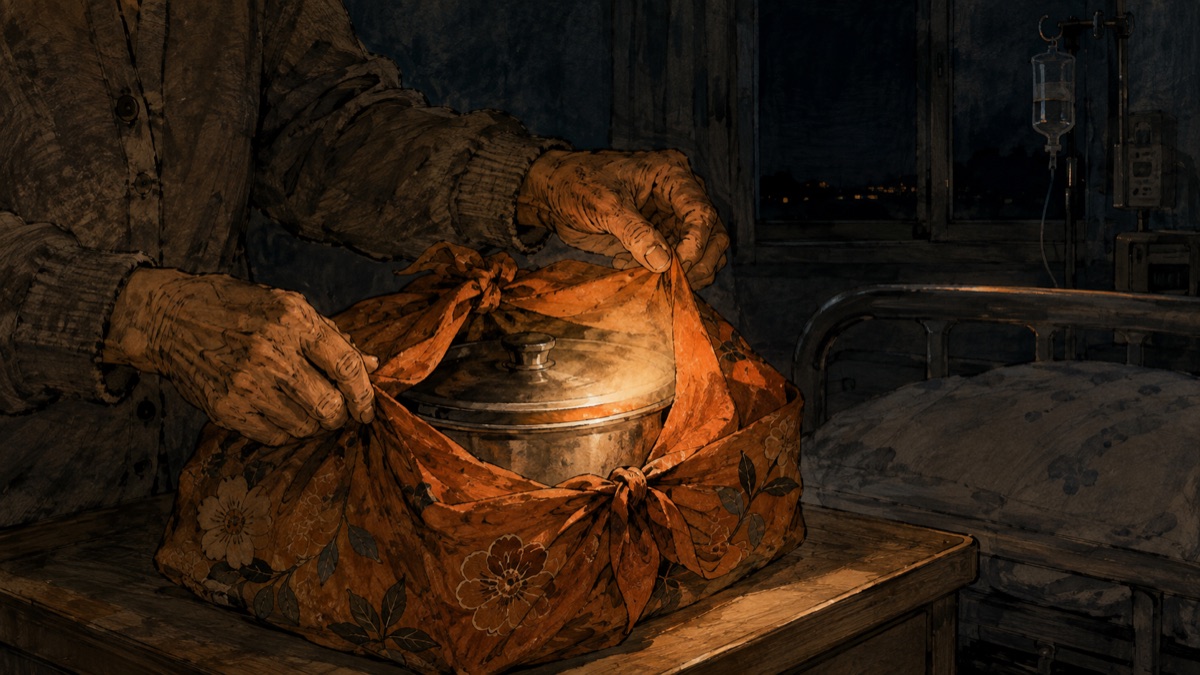
Seo-yeon was six hours old when the door swung open and her grandmother came in out of the cold, carrying a pot wrapped in cloth.
The cloth came undone before any hello: two knots, one pot, one ladle.
The new mother saw the pot before she saw her mother. "The hospital feeds me. You didn't have to—"
"A first meal gets cooked at home."
"How did you even get here? At this hour."
"First bus."
The mother started to do the math on that, and decided not to. Outside the window it was still dark.
The lid came off. Steam went up and kept going, and the room stopped smelling like a hospital and started smelling like toasted sesame oil. Under the surface, long ribbons of seaweed turned over in the broth — whole, unbroken. "You don't snap the seaweed for a new mother," the grandmother said. "That's what I was always told."
Miyeokguk. Seaweed soup. Learn the smell now — Seo-yeon will be smelling it for the rest of her life.
"Mom. You know I don't even like this soup."
"You'll learn to. You're eating it for the next three weeks."
"I already ate."
"Eat again."
"……"
"Samsin's share is set aside at home. White rice, one bowl of soup. She gave you an easy birth. Debts get paid."
"You still set that table?"
"Believing's got nothing to do with it. You get something, you pay it back."
Samsin Halmae — the grandmother spirit who decides which babies get born, and to whom. On day one you may skip a great many things. You do not skip her portion.
The mother took the bowl. She had argued with this woman before and knew how those went.
"The old people used to say," the grandmother said, settling into the chair like someone with nowhere else to be, "that a whale who's had a calf goes off and tears loose some seaweed. Down there in the cold water. Sorting herself out, and nobody taught her. People watched. People copied."
"Whales."
"Whales."
"Says who?"
"Says eat. It's getting cold."
The mother laughed and took the first spoonful. Something hot went down her throat and kept going. The soup she claimed not to like went down — a second spoonful, then a third. The grandmother put the lid back on the pot.
In the bassinet, Seo-yeon opened her mouth and shut it again. Not crying — yawning. One fist, the size of an apricot, had worked its way out of the swaddle.
The first thing Seo-yeon ever smelled in this world was disinfectant. The second was the sea.
2. A Birthday Morning, 2016
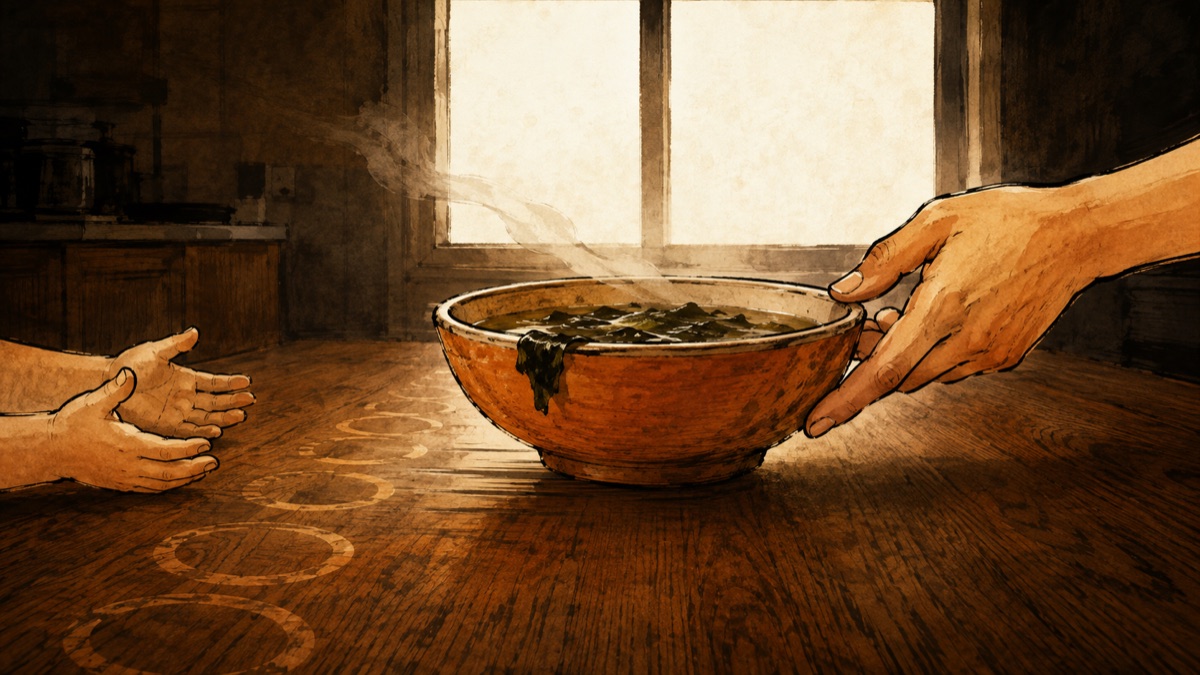
"Seaweed soup. Again."
Eight-year-old Seo-yeon held her spoon the way a lawyer holds a document. The school cafeteria had served seaweed soup yesterday. Today was her birthday — one day a year — and the menu had been decided without consulting her.
There was a cake in the refrigerator, waiting for the afternoon. Three friends from class were coming over. That was what a birthday was, as far as Seo-yeon knew: candles, wrapping paper, sweet things only. Seaweed soup appeared nowhere on that list.
In Korea the birthday menu is not a choice. It is an inheritance.
"A birthday without seaweed soup would be sad," her mother said.
"Sad for who?"
"For me."
Seo-yeon put the spoon down, which in her house counted as filing a motion. Her mother pulled the bowl across the table to her own side, ate one spoonful, and pushed it back.
"The day you were born I ate this three times a day. For a month. So it was never your soup. It's mine. Once a year I let you have a bowl of it."
Seo-yeon looked down at the bowl that had just been repossessed and returned.
"Why?"
"Because a birthday isn't finished until you've eaten the food of the person who did the work."
She chewed on that, and found the crack in it.
"Then on your birthday?"
"That's your grandmother's soup. She ate it when I was born."
"And on Grandma's birthday?"
"Her mother's soup."
"And above that?"
"It doesn't end."
"It has to end somewhere."
"Keep eating. You'll get there."
"…How long do I have to keep eating it?"
"Until you die."
"Did you ask all this too? When you were eight?"
"I did. At exactly your age. With exactly that face."
"What did Grandma answer?"
"'Keep eating. You'll get there,' is what I was told."
No eight-year-old absorbs a sentence like that on the first pass. So she did what eight-year-olds do — fished out a ribbon of seaweed, chewed it, and thought that for one bowl, this was a suspicious number of people.
3. The Night Before the Exam, 2026
The evening news said tomorrow's rush hour would start an hour late. It also said that during the English listening section, every plane in the country would stop taking off and landing. On the screen, someone was hanging a banner over a school gate. A cold snap was forecast for the morning.
The Suneung. One exam, one day, nine hours, half a million students. Korea has no quieter moment all year than the minutes its planes sit on the runway so that no student mishears a syllable.
Twelve hours out from all of that, dinner was wrong.
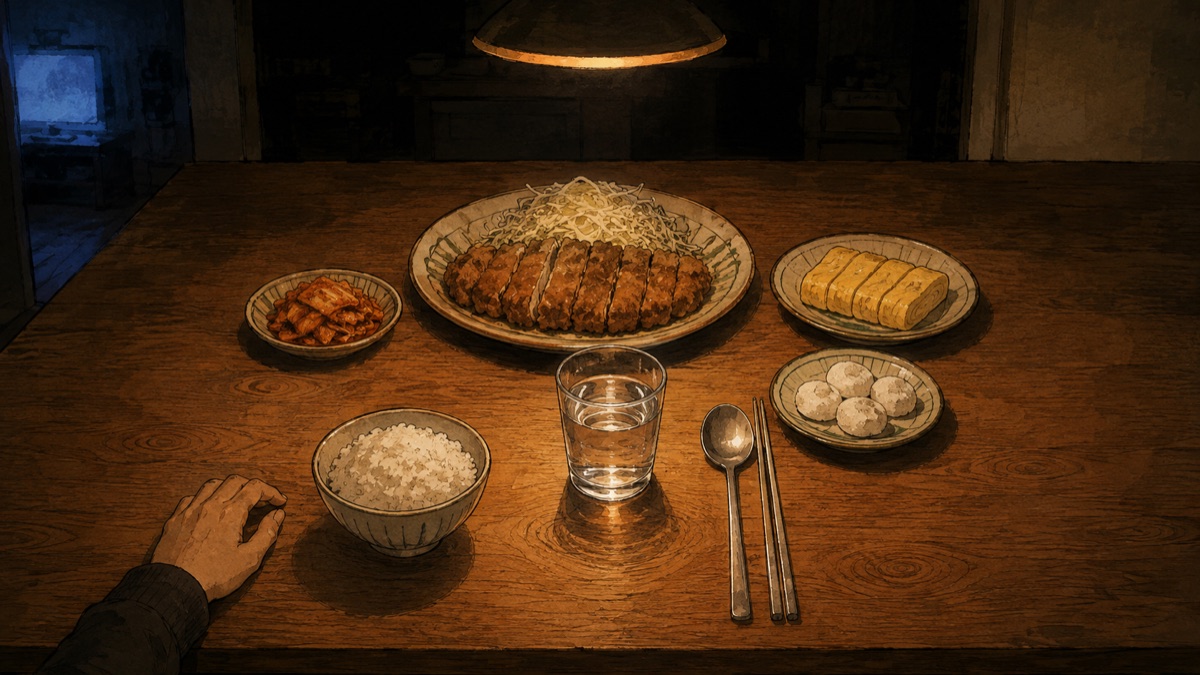
Pork cutlet. Rolled omelet, her favorite, cut thicker than usual. The table had the guilty generosity of a bribe.
No soup. It had come without being asked for, year after year, and tonight the place where the bowl went was holding a glass of water.
"Mom. Where's the seaweed soup?"
The kitchen went quiet in the way kitchens do when someone is deciding how much to say.
"You have an exam tomorrow."
She could guess. She asked anyway.
"So?"
"Do you know how slippery seaweed is?" Her mother did not turn around. "You don't eat seaweed soup before a test. You'll slip."
In Korean, slipping and failing an exam are the same word. Miyeok is seaweed. Seaweed is slippery. Her mother had not spent eighteen years feeding this child to lose it all on a technicality.
Seo-yeon laughed out loud. The soup she had been sick of since birth was, on the first evening she had ever wanted it, contraband.
She went and checked anyway. The cupboard had been rearranged: in the spot where the seaweed bag lived stood a bag of dried kelp — a stand-in. Her mother watched her from the doorway.
"It's not there."
"I can see that."
She would find out later where it had gone — the bottom drawer of the kimchi fridge, under the cabbage, in a bag inside another bag.
In the soup's place, her mother set down chapssaltteok: sticky rice cakes, glossy and smug. "Eat only things that stick." Next to them, a bag of yeot — hard taffy her grandmother had sent, so the university would stick to her.
In Korean, to stick and to pass are also the same word. This was not dinner. It was a spell, cast with a completely straight face.
Seo-yeon ate a rice cake. It stuck to her teeth, which she decided to take as a good sign.
That evening, the phone rang.
"Did you eat the rice cakes."
"…Yes."
"The taffy too."
"I was getting to—"
"Stick."
She hung up.
The television went off before nine. Seo-yeon took her exam slip out of the front pocket of her bag, looked at it, put it back, and took it out again. The living-room light went out earlier than usual. For the first time all day she could hear the wall clock. Nobody said go to bed, and the whole apartment pretended to sleep. She was under the covers before midnight. Sleep arrived much later.
The kitchen light was on before her alarm went off. Breakfast passed without soup; her rice stopped at half a bowl. The cold had come in on schedule. Her mother wound the scarf one more turn, up over her chin. The side pocket of her school bag bulged — yesterday's rice cakes. She tied her shoelaces twice.
She picked up her lunchbox and opened the front door. Behind her, her mother said:
"Come home when it's over. I'll have it on the stove."
The Evening After
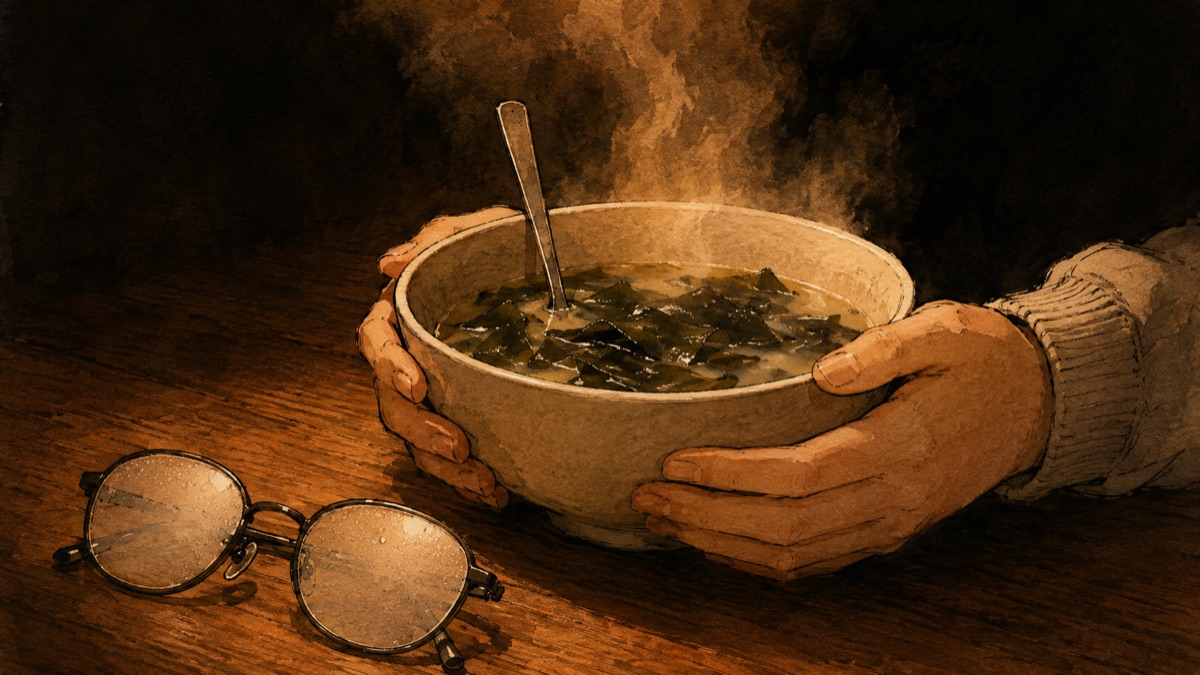
She knew before the elevator doors had finished opening. The smell had come the whole length of the hallway to meet her. It grew stronger with every step.
She opened the door onto a set table. The bottom drawer of the kimchi fridge stood open; a torn seaweed bag lay by the sink. The soup she had resented for eighteen years, and missed for exactly one day, was back where it had always been.
"How did it go?"
"No idea. Give me the soup."
Her mother set the bowl down. Seo-yeon took it in both hands and just held it. Steam fogged her glasses. She took them off and lifted the first spoonful. Something hot went down her throat and kept going. There was more seaweed in the bowl than usual.
A ribbon of it slid off her spoon. She fished it out and ate it. It was allowed to slip now.
"Is this coming back on my birthday?"
"It's my soup, I told you."
The ladle visited her bowl once more.
The results would come in December. The soup came back that same evening — the way it had, one way or another, since the day she was born.
The phone rang. Seo-yeon answered with the spoon still in her mouth.
"Did you eat."
"…I'm eating."
"Good."
Outside the Story
Miyeokguk is seaweed soup: miyeok — sea mustard, or wakame — sautéed in sesame oil and simmered, usually with beef or clams. A Korean meets this soup on the day they are born, and then again on every birthday for the rest of their life.
The first meal served to a mother after childbirth was called cheotgukbap — "the first soup and rice." White rice, seaweed soup. A portion was set aside first for Samsin Halmae, the spirit said to grant children, and for twenty-one days the soup stayed at the mother's side.
Birthday soup is a reenactment of that first table: each year you eat the soup your mother ate the day she delivered you. Which is why the standard Korean birthday greeting is not about cake. It is a question. "Did you eat your seaweed soup?"
Before an exam, the rule flips. In Korean, to slip and to fail are the same word, so the slippery soup leaves the table and sticky things arrive in its place — chapssaltteok rice cakes and yeot taffy, because to stick and to pass are the same word too. And to say that someone flunked, Koreans have a gentler idiom: "They ate seaweed soup."
As for where the soup began, the story most often told is that people learned it from whales — that a Tang-dynasty Chinese text records mother whales tearing off seaweed after giving birth, healing themselves in the cold water. The text is real, and all thirty volumes of it are public. People have gone looking. The whale entry lists the whale's size and its names; the seaweed entry lists where it grows. The sentence that puts the two together with a new mother appears nowhere at all. The story is supposed to be a thousand years old. Its source is missing, and it gets told anyway — which may be the most accurate thing anyone has said about this soup.
Sources
- National Institute of Korean History, 우리역사넷 — cheotgukbap, the first postpartum table; jang-gwak (長藿), the unbroken seaweed
- Encyclopedia of Korean Culture (한국민족문화대백과사전) — samchilil, the twenty-one days (E0026905); geumjul (E0008002)
- Chuxueji (初學記), full text at the Chinese Text Project — the whale–seaweed–mother passage appears nowhere in its thirty volumes
- Standard Korean Language Dictionary (표준국어대사전) — the idiom '미역국을 먹다', to eat seaweed soup: to fail an exam
- Korea Policy Briefing (대한민국 정책브리핑) — Suneung-day measures: delayed rush hour, flights held during the listening section
- Ministry of Education (교육부) — Suneung score release schedule